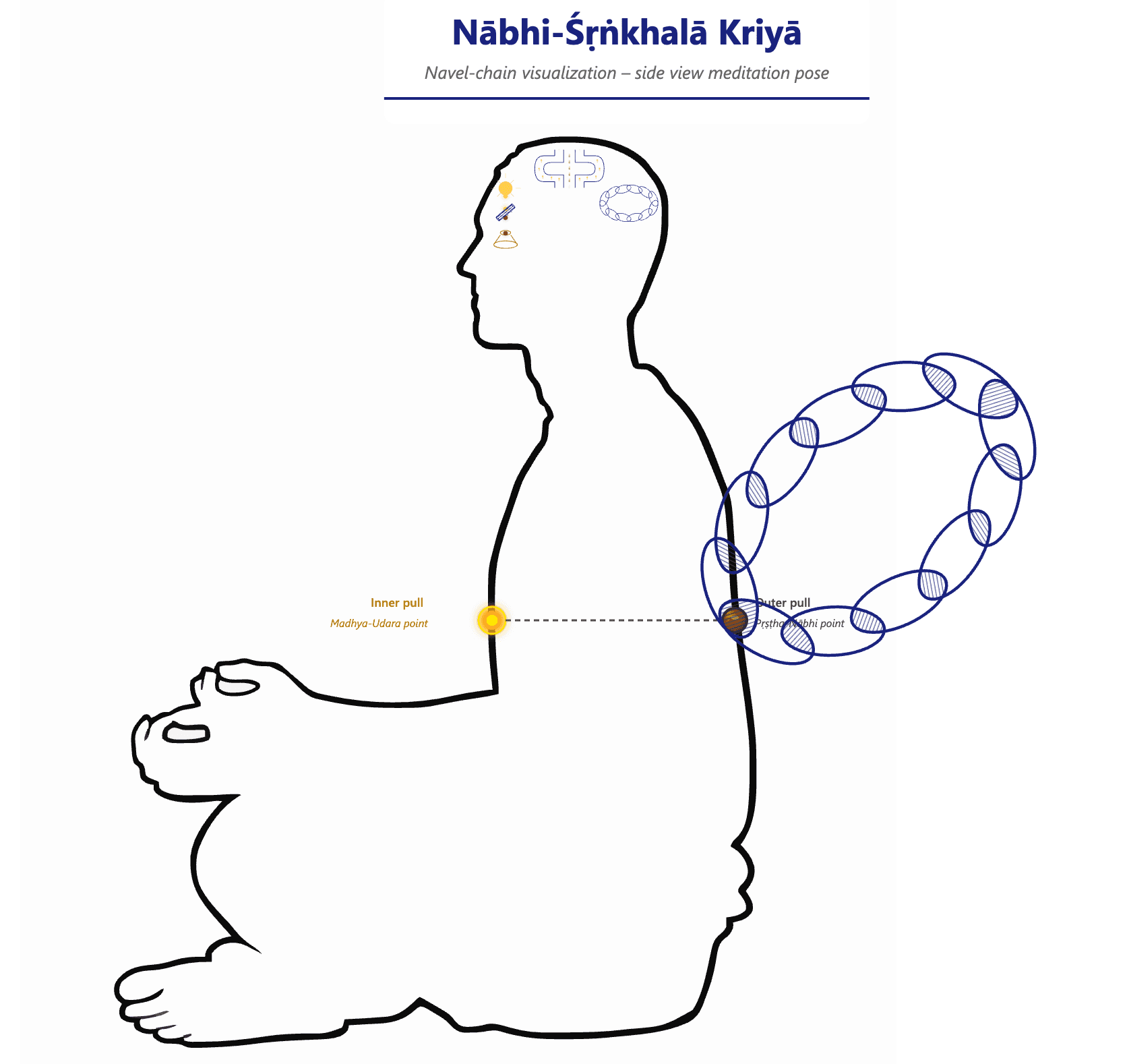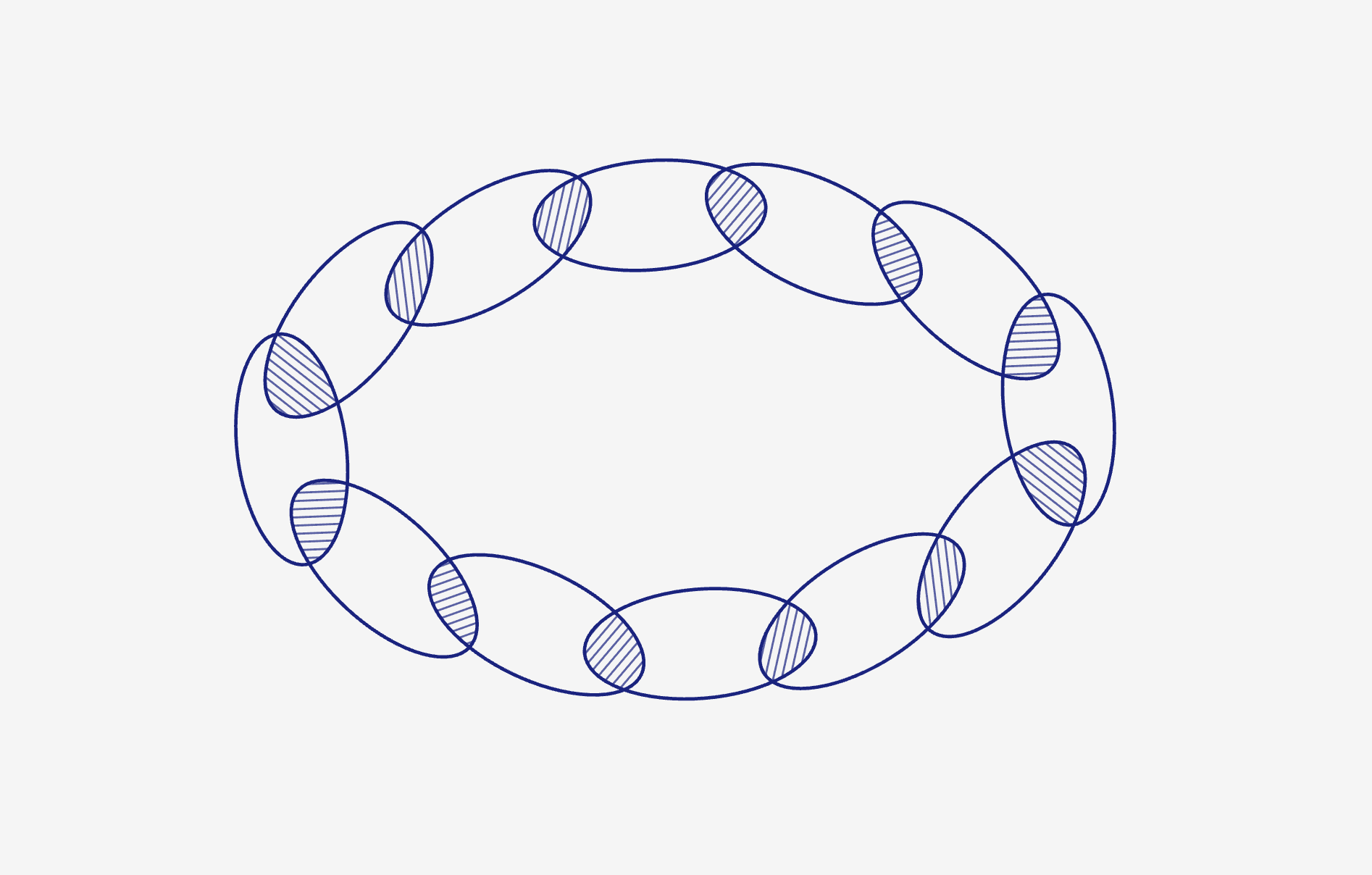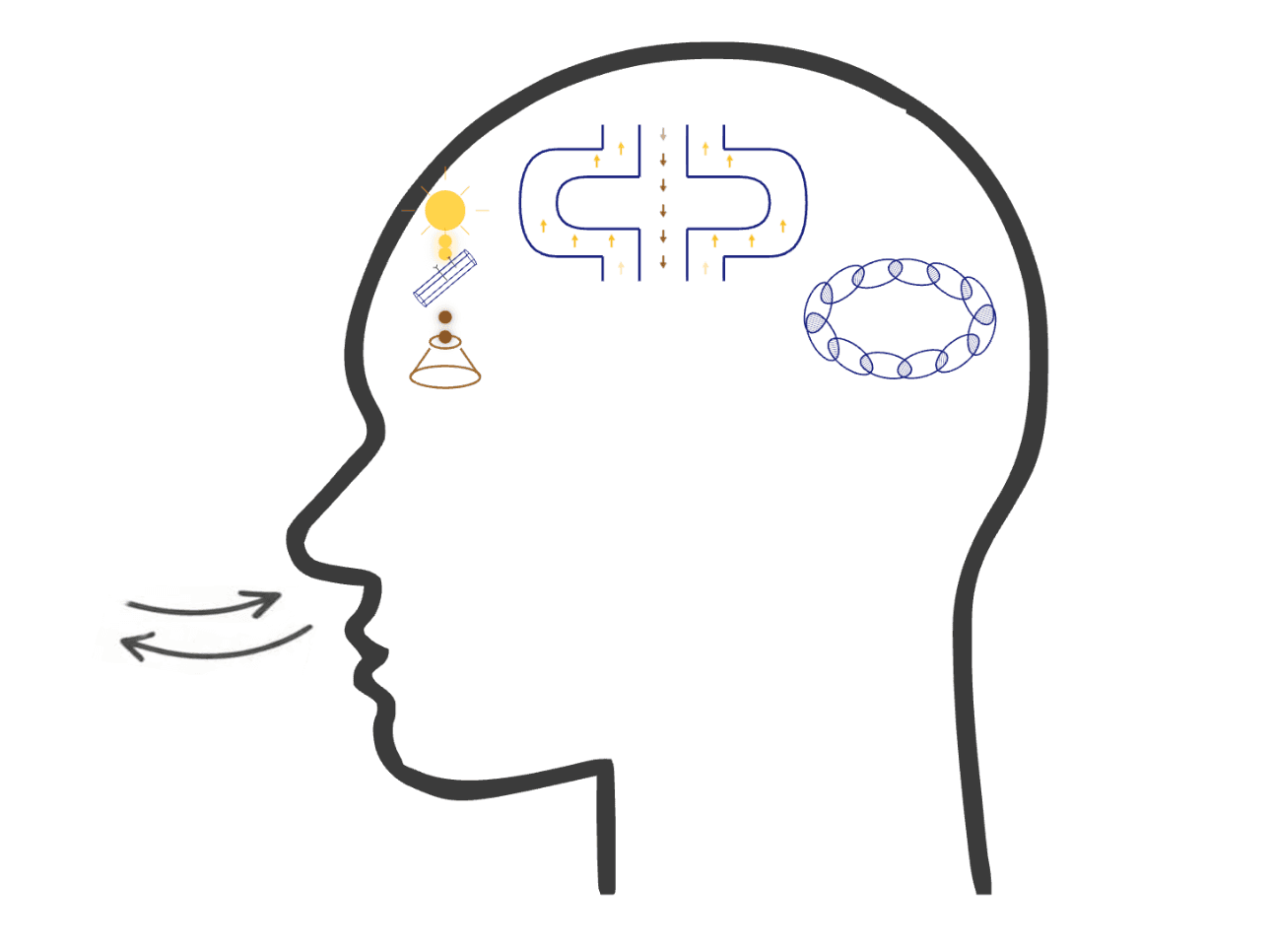
When Three Become One Breath
The integration that gives Traya Yukti its name
By Brahmanda Dhyana Tapovanam
Sthira. Prāṇa. Śūnya.
Three layers, learned in order, each one only possible because of the one before it. For a long stretch of the practice they remain what they appear to be: three separate things you are getting better at.
And then something shifts. They stop being three.
Filtered, energised, emptied
The integrated state is described in three words, and they map onto a single cycle of breath:
One full cycle of breath — filtered, energised, emptied.
- Filtered — the inhale, stabilised by Sthira
- Energised — Prāṇa working across the whole movement of the breath
- Emptied — the exhale releasing into Śūnya, and the gap that follows
Three functions, one breath. Not performed in sequence, but occurring together.
The formula, and how to read it
Traya Yukti is often written as:
Sthira → Prāṇa → Śūnya = Traya Yukti
The arrows are honest about the learning path but misleading about the destination. In the beginning you do move through them in order. In Traya, that order collapses.
By this stage these three no longer function as separate attainments, but as one unified inner practice.
You are no longer doing Sthira and then doing Prāṇa. You are breathing — and all three are present in the breathing.
Why integration is a stage of its own
It would be easy to assume that once you know three things, having them together is automatic.
It isn't — which is why the fourth stage exists rather than being left to happen by itself. Holding three refined qualities simultaneously, inside a single breath, without any of them displacing the others, is a distinct skill.
Mastering three instruments does not make you an orchestra.