Twenty Thousand Breaths a Day, and You Have Met Almost None of Them
Where the second layer of Traya Yukti begins
By Brahmanda Dhyana Tapovanam
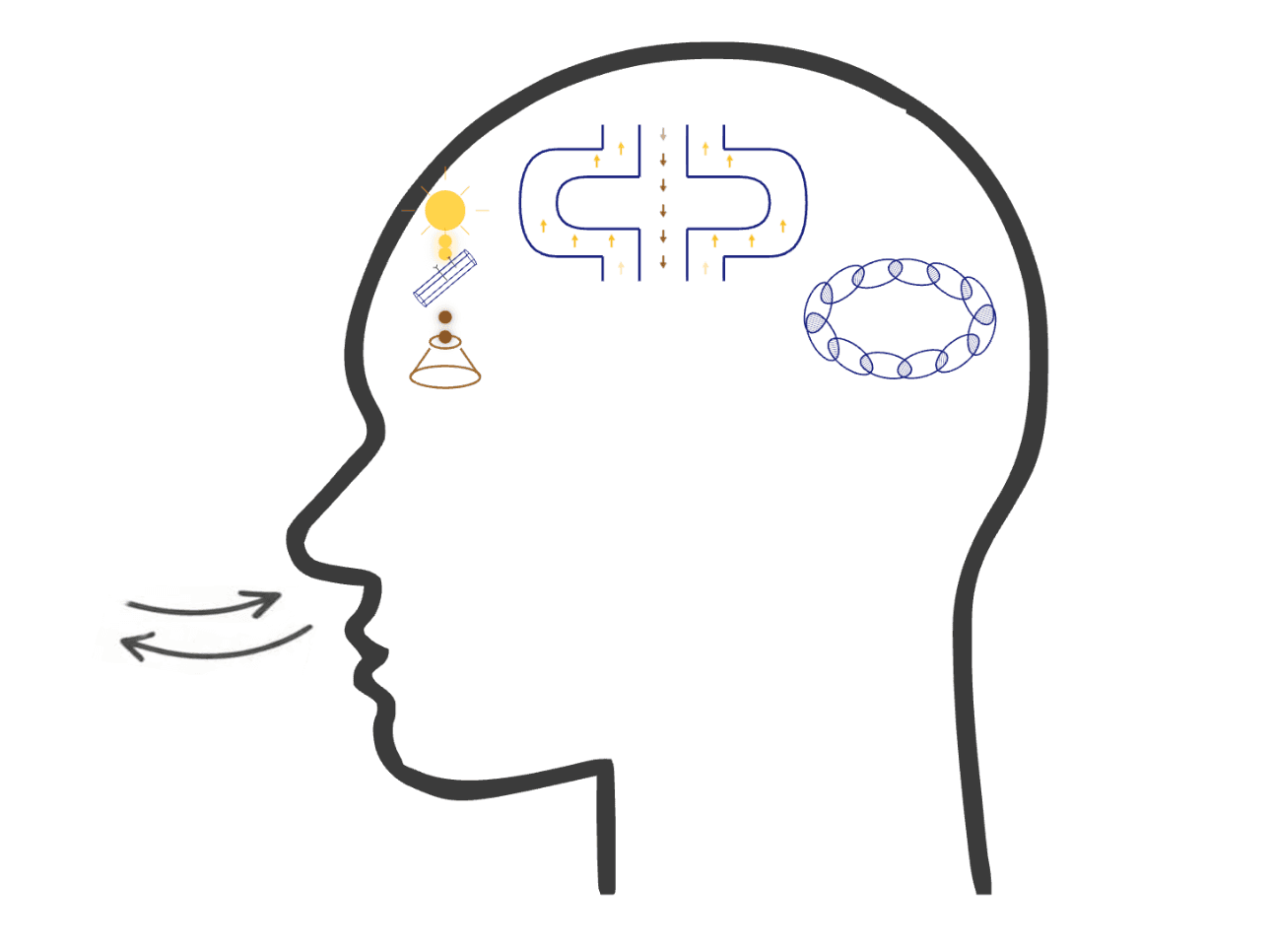
Roughly twenty thousand times a day, air enters you and leaves again. It has been happening without interruption since the moment you were born.
Almost none of it has been attended to.
This is not a failing. Breath is autonomic precisely so you do not have to think about it. But it means that the single most constant event of your life is also the one you know least well.
Why it only becomes visible after Sthira
There is a reason Prāṇa is the second layer and not the first.
In an unsettled body, the breath is drowned out. Between the knee and the shoulder and the restless spine, there is too much signal. You cannot hear something quiet in a noisy room.
Sthira makes the room quiet. Only then does the breath become audible — and once it is audible, it becomes workable.
What Prāṇa is in this system
Prāṇa (प्राण) is life-energy. But Yukti Sadhana treats it with unusual precision:
Prāṇa is a breath-based algorithm focusing on timing and rhythm of inhale and exhale patterns. It trains the breath to become subtle, guiding the life-energy through the nervous system.
Two words carry the weight: timing and rhythm. Not force. Not volume. The breath is being treated as something with structure — something that can be refined the way a musician refines phrasing.
An instrument, not a metaphor
Note the end of that description: guiding the life-energy through the nervous system.
This is not poetic language. The breath is being used as an instrument to reach the nerves — a mechanism, with a destination. Where Sthira worked on structure, Prāṇa works on what runs through it.
Something you can notice today
You do not need a technique for this. Simply, at some point today, catch yourself mid-breath and observe one full cycle. In. Out. That's all.
Most people find they cannot do it for long before attention slips. That slip is worth noticing — it is the exact distance between having a breath and knowing it.