The Breath Reaches Places Your Will Cannot
Why Prāṇa is aimed at the nervous system
By Brahmanda Dhyana Tapovanam
Try this thought experiment. Command your heart to slow down. Command your digestion to improve. Command the tension in your gut to release.
Nothing happens. These systems do not accept direct instruction — they are autonomic, deliberately placed beyond the reach of will.
And yet they are not beyond reach entirely. There is one autonomic function you can take conscious hold of.
Breath is the door that opens both ways
Breathing happens without you. It also happens with you, the moment you choose to take it over. That dual nature is unique in the body, and it makes the breath a doorway between the voluntary and the involuntary.
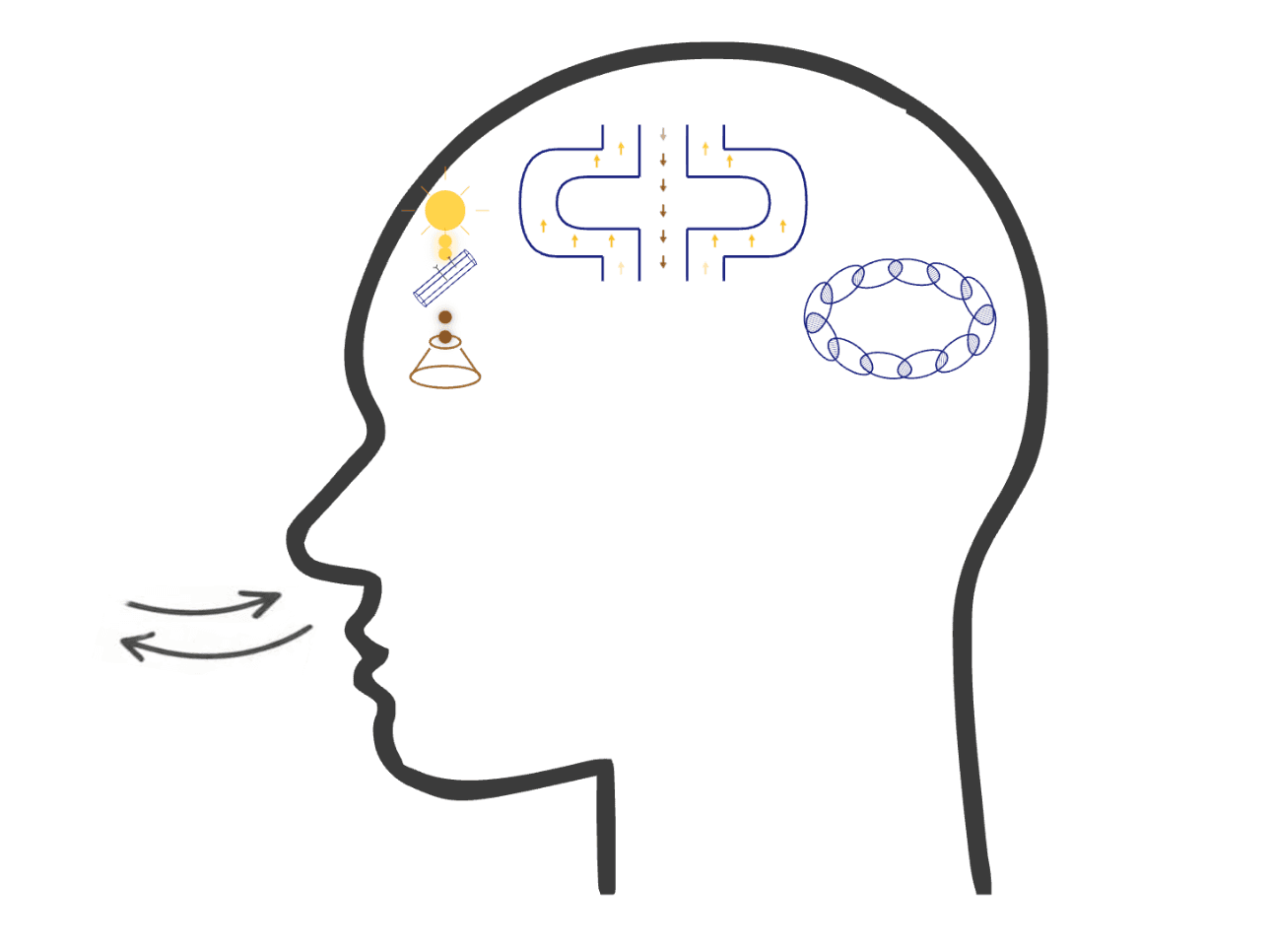
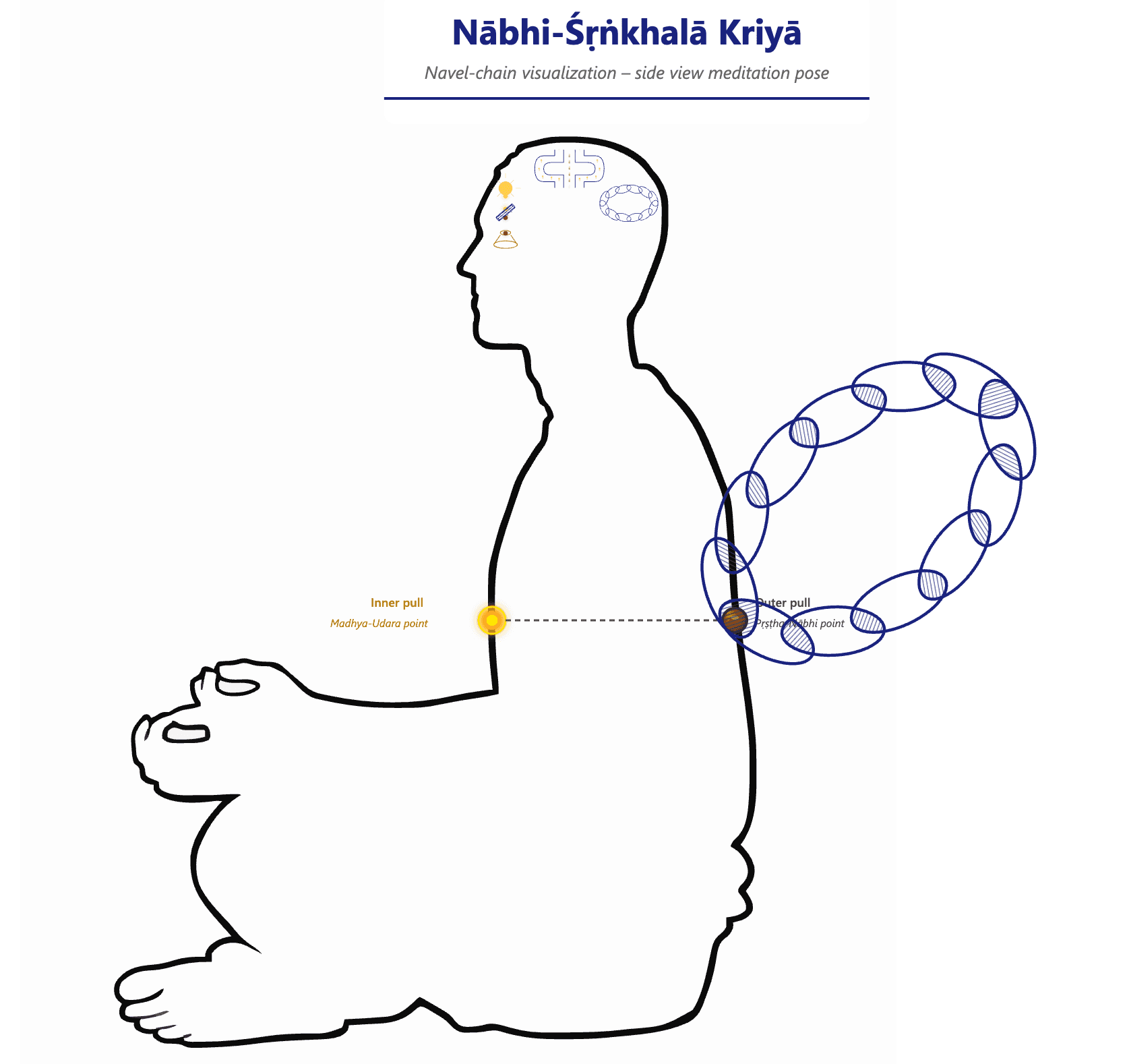
Yukti Sadhana states this plainly. Prāṇa is guiding the life-energy through the nervous system. The breath is the handle; the nervous system is what is being handled.
Where sound comes in
The first Prāṇa kriyā, OM-Spanda, works with inward OM humming until the body becomes a resonant field.
The distinction being drawn is worth pausing on: not OM as a sound you make, but OM as a vibration you become. Chest, skull, spine — all registering one frequency.
Sound reaches inward in a way that muscular effort does not. You cannot tense your way into the interior of your own body. A vibration travels there without being sent.
The pattern to notice
Look at what Sthira and Prāṇa have in common.
Sthira does not order the mind to be steady — it removes the body's reasons for interrupting. Prāṇa does not order the nervous system to settle — it works the one lever the nervous system responds to.
In both cases the target is approached indirectly, through the mechanism that actually governs it.
That is not a coincidence. It is the definition of a Yukti.