Subtle, Not Deep: What Prāṇa Actually Trains
The direction of travel is toward less, not more
By Brahmanda Dhyana Tapovanam
"Take a deep breath."
It is the most common piece of wellbeing advice in the world, and for an acute moment of stress it is not bad advice. But as a description of what breath training is for, it is misleading — and it sends most people in exactly the wrong direction.
The goal is refinement, not effort
The Yukti Sadhana description is unambiguous. Prāṇa trains the breath to become subtle.
Not bigger. Not stronger. Not longer for its own sake. Subtler — a breath so refined that it barely disturbs the stillness Sthira spent all that work building.
Think about what a forceful breath does to a settled body. It moves the ribs, shifts the spine, disturbs the shoulders. You have just undone the foundation in order to practise on top of it.
Why subtlety is harder than depth
Anyone can breathe deeply. It takes seconds to learn and no sensitivity at all.
Breathing subtly is a different order of skill, because you cannot achieve it by trying harder — trying harder is what produces force. It arrives only through attention: noticing the breath finely enough that it begins to quieten simply from being observed.
This is why Prāṇa is described in terms of timing and rhythm. Both are qualities of precision. Neither is a quality of effort.
What the four kriyās are for
Prāṇa comprises four kriyās, and each has a distinct job:
- OM-Spanda Kriyā — awakening inner vibration, until the body becomes a resonant field
- Deha Chalana Kriyā — activating the prāṇic field, teaching the body to move without losing its stillness
- Padma Saṅgraha Kriyā — the gathering; saṅgraha means to collect, and here what was scattered becomes single
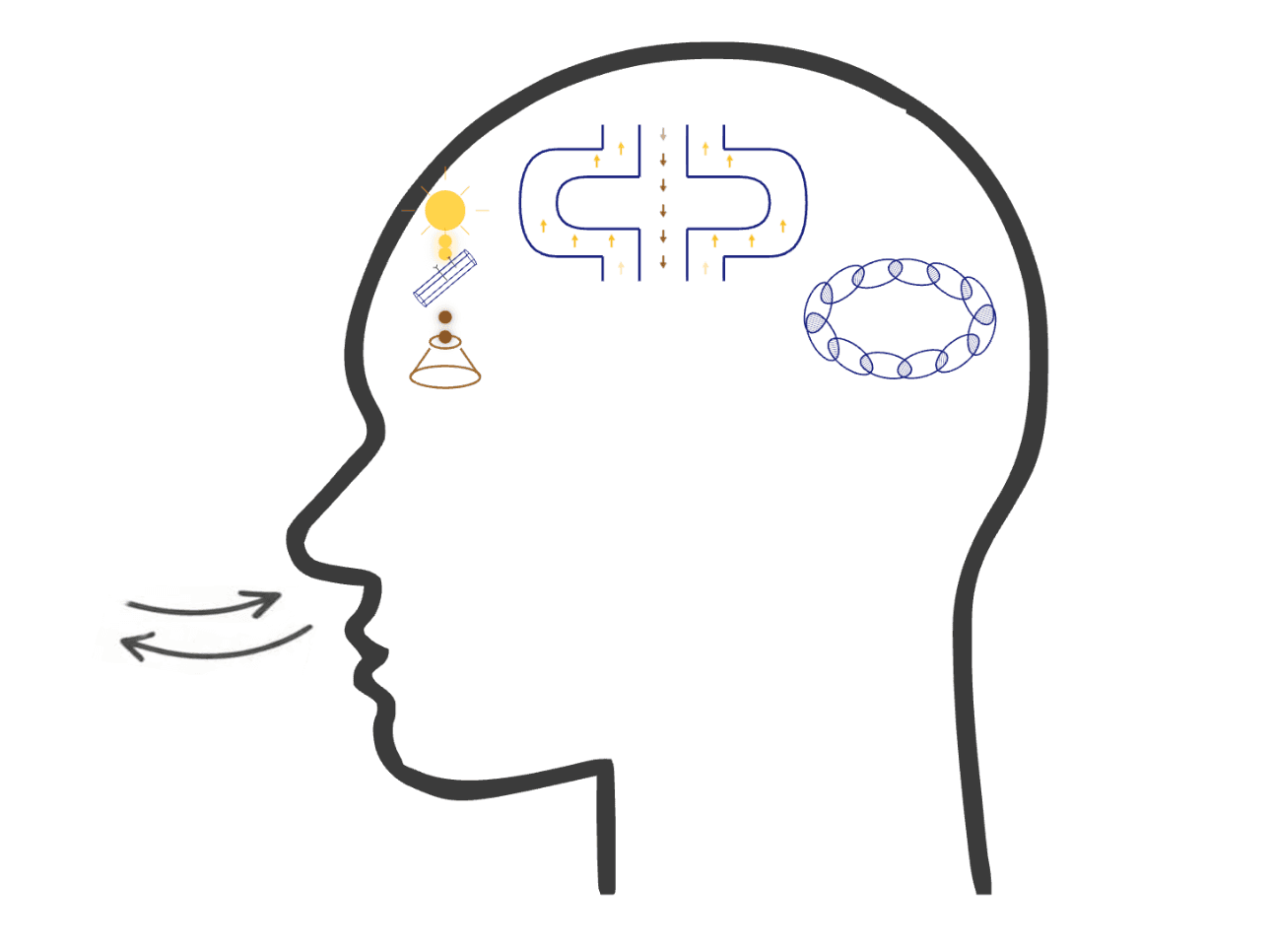
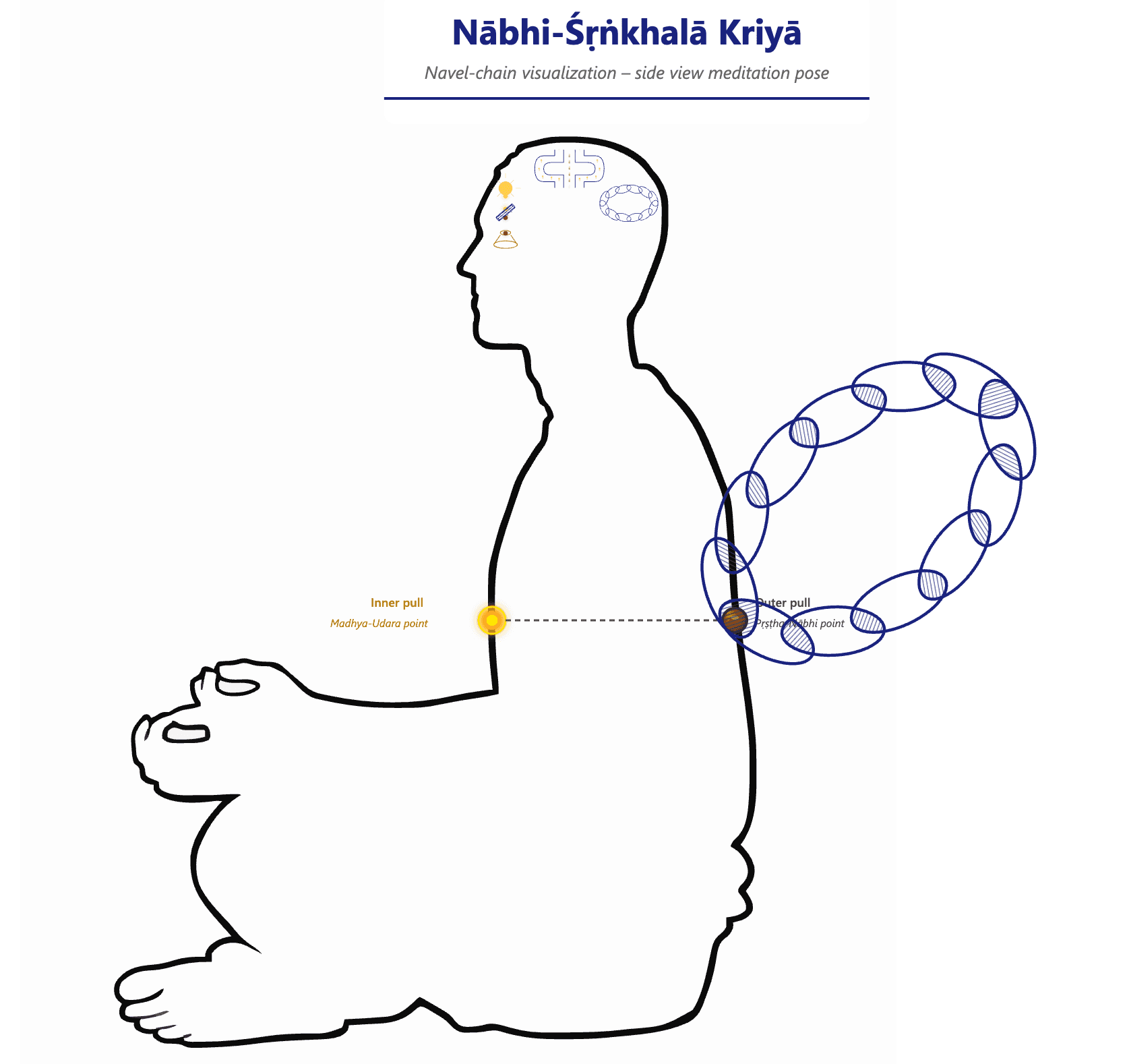
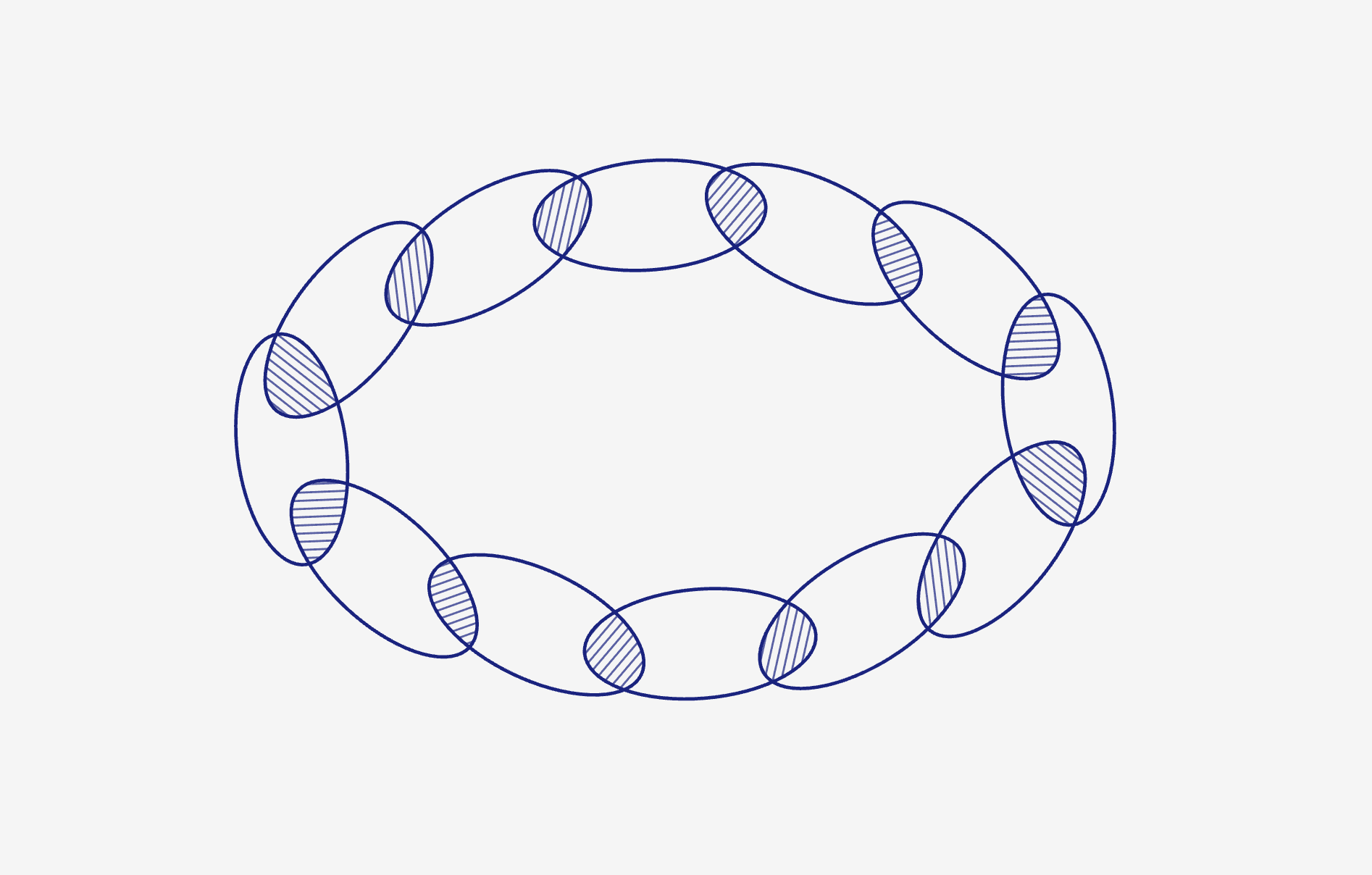
- Nābhi Śṛṅkhalā Kriyā — the navel chain, which is significant enough to deserve its own discussion
Notice the progression: vibration, then movement, then integration, then anchoring. Again, an order — and again, each step depending on the last.